
Q: Can you tell us a bit about your background?
A: My name is Olivia Cotovich, and I am a Port Macquarie-based artist. I have always loved art and drawing throughout my childhood, but I first started painting in 2020 during the COVID lockdowns. At the time, I was in Year 10, so school wasn’t too serious yet and I had plenty of extra time to get creative. I first gave acrylics a go, but I hated how quickly they dried, so I decided to try oils — and absolutely loved them! Oil paint gave me the freedom to take my time mixing colours, blending, and pushing and pulling the paint across the canvas.
Q: What are you working on now, and what is the story, concept or inspiration driving it all?
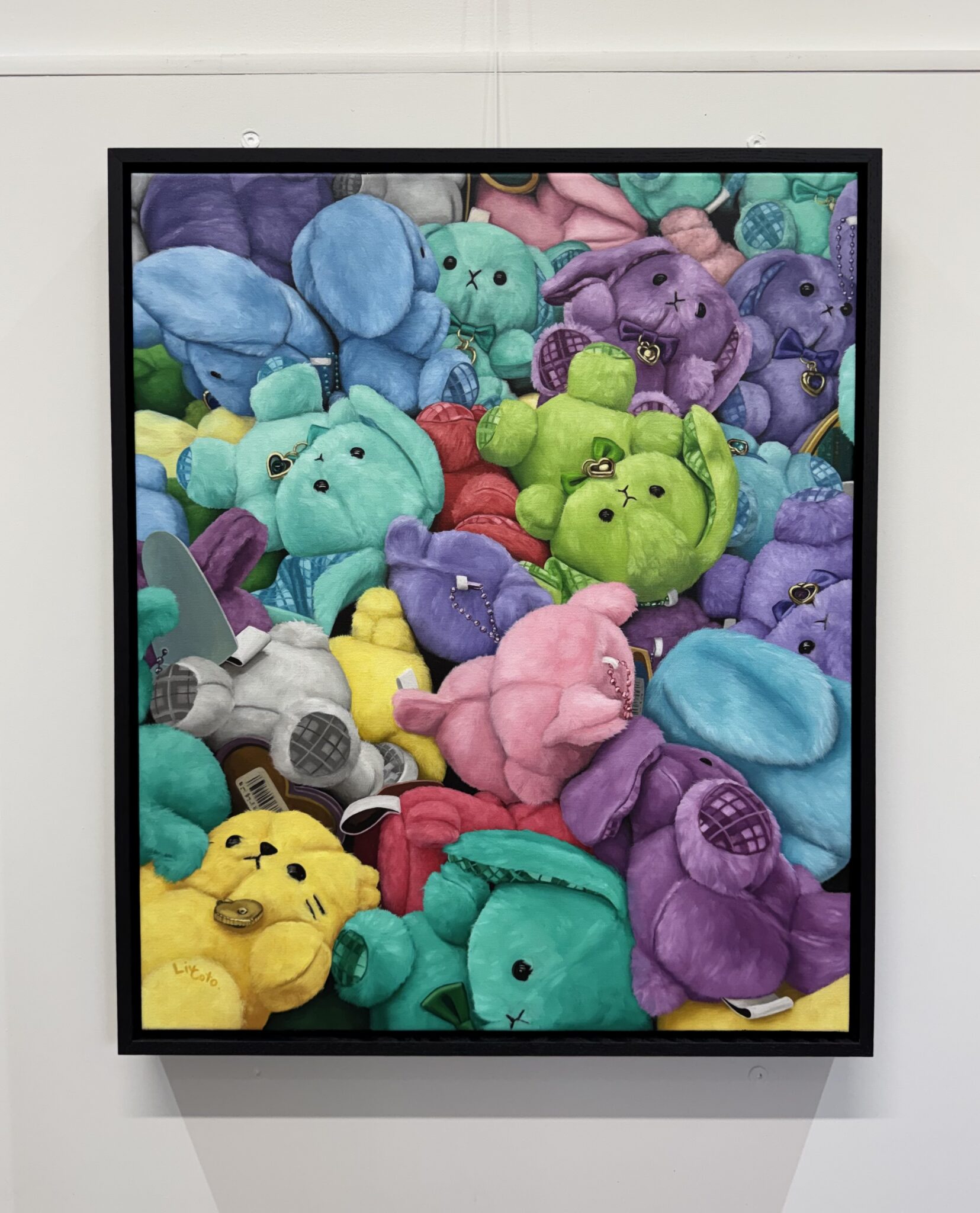
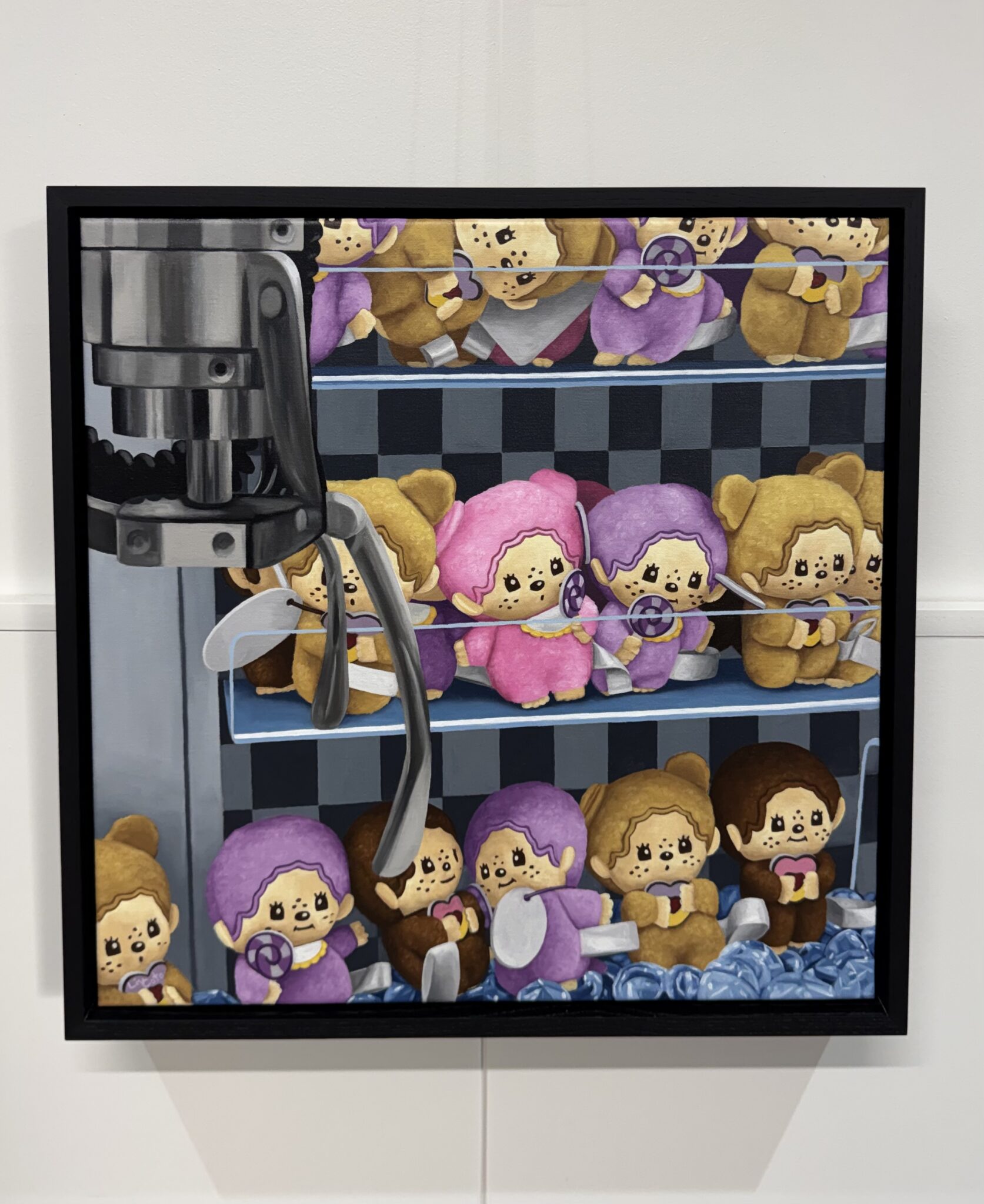
A: I am currently working towards my debut solo exhibition, Pay To Play! I’m incredibly excited to be exhibiting at The Laneway Gallery, a beautiful little gem of a gallery in Coffs Harbour. Since November, I have been working on this new collection of 20 original oil paintings inspired by my trip to Japan last year, recording roughly 600 hours of painting time in the process. I’m so excited to finally share what I’ve been hiding away in my studio!
Japanese culture is incredibly unique, and I really fell in love with what felt like an overwhelming number of plushies and claw machines. In the cities, it seemed like almost every block had a massive arcade filled with them. I must have looked a little crazy taking a million photos of the toys and machines to use as references for my paintings!
In these paintings, I have deliberately made everything brighter as a way of celebrating colour, life, childhood, and the joy that comes with it.
Colour is one of the most amazing things in our everyday lives, yet I think it can be easy to overlook and take for granted. I also loved how common it is in Japan to buy plushies and cute merchandise without being seen as childish. My collection explores underlying themes of consumerism, value, and our lifelong attraction to play.
One thing I found particularly interesting was the contrast between what is considered childish and what is considered professional. We noticed that many Japanese men didn’t wear shorts — in fact, we didn’t see a single Japanese man wearing shorts in the city on a 28-degree day! Shorts can be viewed as unprofessional or even ‘boyish’. Yet many of these same men would happily spend money playing claw machines to win cute, colourful toys — something that we might generally associate with children in Australia. I found this contradiction really interesting and wanted to explore it through my work.
Q: What materials, tools, or processes do you typically work with, and what draws you to them?
A: I paint colourful and highly detailed still lifes using oil paint on canvas. I love how oils give me the freedom to blend and manipulate the paint at my own pace. I can even have lunch, go to the gym, and come back to my painting at the end of the day to find the paint still wet and workable! I also work with a range of different-sized brushes, which allows me to build up details both big and small.
Q: We’d love to hear about your use of realism and symbolism in your work. What draws you to the realism style? How do you choose your subjects?
A: I have always loved realism and appreciate the details found in everyday objects. Sometimes the process can take forever and feel like a bit of a slog, but it is always worth it for the end result. Nothing beats finishing a painting that I am genuinely proud of, and I find it incredibly satisfying when everything finally comes together.
When deciding what to paint, I usually begin with a random idea or an object that I think would be interesting to translate into a painting. Unlike my Pay To Play paintings, I have complete control over my regular still lifes — from where each object is placed to the colours I deliberately choose. Before I begin painting, I create composition sketches, decide which objects I would like to include, and establish the main colours I want to work with. It is a very deliberate process. Once I am happy with my concepts, I gather my objects and camera, arrange the still life, and take my own photograph to use as a reference while painting.
Q: And how have you found the journey of developing your techincal skills? What has been the most helpful practice or understanding or lesson you’ve learned along the way?
A: In the beginning, I didn’t really know what I was doing with oils and, honestly, I was pretty terrible! During the very early stages, I watched a couple of YouTube videos to learn the basics, then just practised, practised, and practised. My love for painting and consistency, along with plenty of trial and error, has gotten me to where I am today. I think my art classes in high school and my background in drawing also helped enormously, as I already understood many of the fundamentals of colour, value, tone, and composition. I just had to learn how to apply those skills to a new medium.
Q: How do you hope audiences will respond to or engage with your work?
A: I hope audiences are captured by the colours and details in my paintings and that my work reminds them to stop and appreciate the little things in their own day-to-day lives.
Sometimes I’ll find myself looking at an object or something in nature and admiring the way the light hits it and the colours that appear. It’s amazing to think about how many beautiful colours occur naturally in our world.
Q: Can you tell us a bit about your process and journey in bringing Pay to Play into being, and what it represents for you?
A: With Pay To Play, I knew I wanted to create a collection based on my experience in Japan. After just a couple of days of being immersed in the culture, I knew this was something I had to explore. Professionally, Pay To Play has pushed me to create the biggest collection of paintings I have ever produced, which has been crucial in helping me land my first-ever solo exhibition. It feels like a huge step forward in my art career.
Artistically, this collection has really tested my determination and commitment. Creating all 20 paintings has been a huge undertaking. Some felt like more of a slog than others at times, but I kept going.
The larger paintings can take up to 64 hours to complete at the level of detail I aim for, requiring a lot of concentration and patience. At the same time, I have had so much fun experimenting with colour and pushing it further to convey that sense of childlike joy.
Personally, I am incredibly proud of this collection and love it for what it is: bright, overwhelming, colourful, and childish. It serves as a reminder to me to never lose the way I see the world and to continue appreciating it. I strive to never become a boring adult with a monochrome house — life is too short to take everything so seriously! I would rather have fun and always keep my inner child around.
I also loved plushies when I was a child, so seeing how accepted they are in Japan felt really special to me. Being able to buy some and bring them home without feeling judged was surprisingly healing. It reminded me that there is nothing wrong with holding onto the things that brought us joy as children.
Q: What does your involvement in Shared Practice mean to you? How’s it going so far, what are you finding helpful or useful, any unexpected discoveries or connections?
A: Being part of Shared Practice has also been an amazing experience for networking and creating connections with other artists and creatives. Everyone has been so lovely and willing to share their advice and lived experiences, which I have found incredibly helpful. I have had so many questions in the lead-up to my solo exhibition, and it has been wonderful to hear everyone’s different thoughts and opinions. The stipend we receive has also been incredibly helpful in supporting our creative practices. The extra funding I have received so far has gone straight towards preparations for my upcoming solo exhibition.
Q: What’s next for you in your creative journey?
A: I’ve been so focused on Pay To Play that I haven’t really thought too much about what comes afterwards — although I’m definitely looking forward to taking a little break from massive collections! I’m excited to paint some random one-off pieces and have fun setting up my own still lifes again. I definitely want to do more exhibitions, both group and solo, in the future. For me, it is just a matter of finding an idea that feels worthy of bringing to life.
The next thing on my list is creating a new painting specifically to enter into the STILL: National Still Life Art Prize. I was lucky enough to be selected as a finalist last time, so now I need to get to work thinking of concepts and ideas for my next submission. Fingers crossed it gets in!
Q: Where can people find out more about you and your work?
A: People can find out more about me and my work through my website, Instagram, and Facebook.
I can’t wait to see everyone at my solo exhibition! For anyone who can’t make it to the opening celebration from 3–5pm on October 3, the collection will go live on my website at 6pm that night.